
At Abbey Hill Golf Centre, our most successful sustainability projects haven’t come from big budgets or outside consultants. They’ve come from making better use of the people, partnerships and resources we already had.
Like many sports venues, we don’t have a dedicated sustainability team or a large environmental budget. What we do have is a genuine willingness to look again at what’s already on site, including the skills sitting inside our own part-time and casual workforce, and put them to use.
Before becoming Sustainability Officer, I worked behind the bar at Abbey Hill while studying for a BSc in Geography, Sustainable Development and Climate Change. As the club’s environmental ambitions grew, Robin Cheng, General Manager, recognised the skills and knowledge I could bring through my studies and gave me the opportunity to apply them in a way that benefited both the club and my own development, rather than seeing me solely as a member of the bar team.
It’s a pattern many sports venues could recognise. University students in part-time, seasonal or casual roles often bring skills, knowledge and interests far beyond the job they were hired to do, whether that’s sustainability, communications, marketing, photography, design or social media. Clubs may already employ this expertise without even realising it. Molly Norman, one of our part-time staff who studies Sports Journalism, is a good example, now running much of our social media and helping tell the story behind the club’s wider work.
That same principle runs through everything we’ve done on biodiversity at Abbey Hill. Rather than commissioning specialist surveys or bringing in contractors, we looked at the land, staff time and local connections already available to us, and asked what they could achieve with a bit of planning. The two projects below, creating wildflower meadows and building a community partnership with Men in Sheds MK, show what that approach delivered: real environmental impact, on a modest budget, using people already part of the club.
Support Feature 1: Biodiversity in Action - Creating Wildflower Meadows
One of the biodiversity projects I’ve been most proud to help deliver is our wildflower meadows, created without specialist contractors, and for little more than the cost of seed.
Wildflower meadows give pollinators and other wildlife valuable habitat, increase plant diversity, reduce mowing inputs and make better use of areas with limited value to day-to-day operations. At Abbey Hill, they turned underused corners of the golf course into some of its most talked-about features.
While this project took place on a golf course, the same approach could work at football clubs, rugby clubs, cricket grounds or leisure centres with unused or low-value land. Below is the guide we followed, along with the practical shortcuts that kept it low-cost and low-resource, so other venues can do the same.
GUIDE
Step 1: Identify Suitable Areas
The first step was identifying areas that could be managed differently without affecting how people use the site.
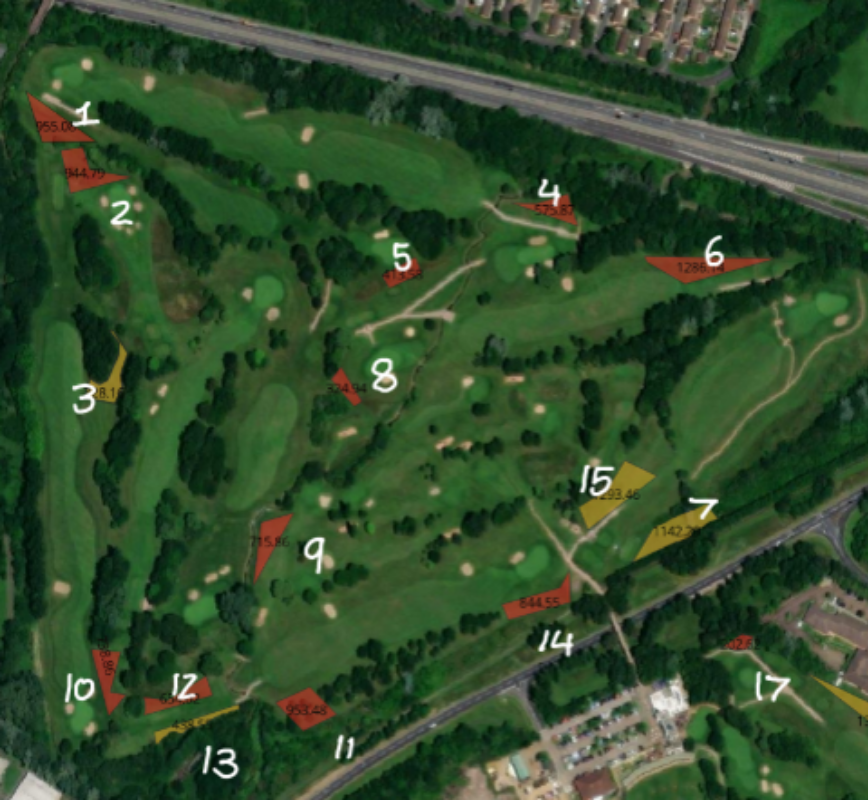
I used GIS mapping to spot potential out-of-play areas across the course, but specialist software isn’t essential. A satellite image and a marker pen will do the job just as well. What matters is finding areas that won’t compromise play, safety or the member experience.
After weighing up several options, we chose the areas with the least impact on golf operations and designated them as biodiversity enhancement areas.
Step 2: Calculate the Area
Once we’d identified suitable locations, I calculated the size of each one in square metres. Again, this can be done just as easily on the ground with a tape measure as with software.
Getting this right mattered for the budget as much as the biodiversity: our seed supplier’s sowing rates are based on area, so accurate measurements meant ordering exactly what we needed, with nothing wasted on over-buying.
Step 3: Mark Out the Meadow Boundaries
With locations agreed, we marked the meadow boundaries on the ground. This simple step helped everyone visualise the project and made sure all the prep work, which was handled by our existing grounds staff rather than outside contractors, happened in the right places.
Step 4: Prepare the Ground
Once locations were agreed and marked out, we started by cutting the grass low across each area. It was then sprayed with herbicide and left to die back, which can look like the area is getting worse before it gets better, but knocking back the existing grass is a key part of the process.
Once the herbicide had taken effect, we strimmed back the dead growth and raked the area clear, creating a clean seed bed and helping the seed make good contact with the soil. None of this required specialist kit, just time and attention from our grounds team.
Step 5: Sow the Seed
With the ground prepared, we sowed the seed in April 2026, spreading it as evenly as possible using the supplier’s recommended rates. About two weeks later, we went back and topped up a few patches where coverage looked lighter than expected.
Step 6: Monitor and Maintain
The following months were about monitoring progress and giving the plants their best chance to establish:
- Monitoring germination and growth
- Removing unwanted weeds where necessary
- Watering during particularly dry periods
- Checking that seedlings were developing as expected
All of this was folded into the grounds team’s existing routine, rather than requiring extra hands or a specialist contract.
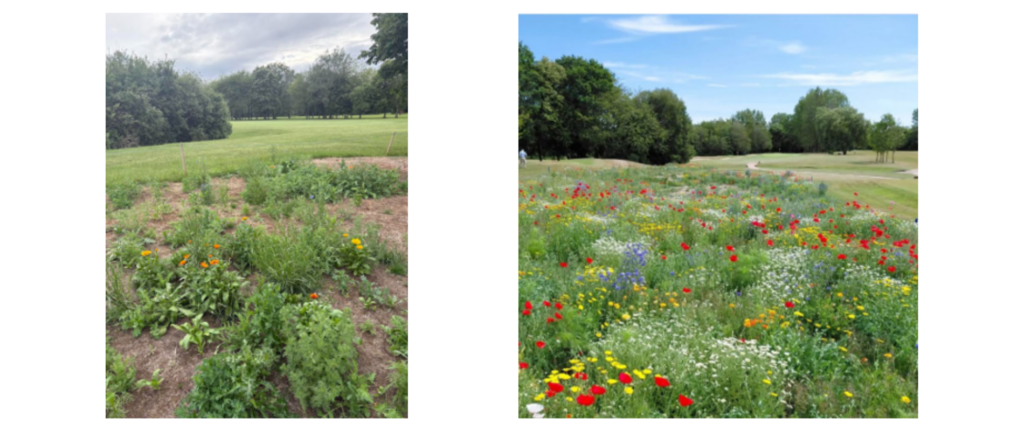
For several weeks it felt as though very little was happening, and it would have been easy to assume the meadow wasn’t developing as planned. However, the photos below were taken just 17 days apart. On 20 June there were only a small number of visible flowers, but by 7 July the meadow had burst into life and was in full bloom.
Step 7: Enjoy the Results
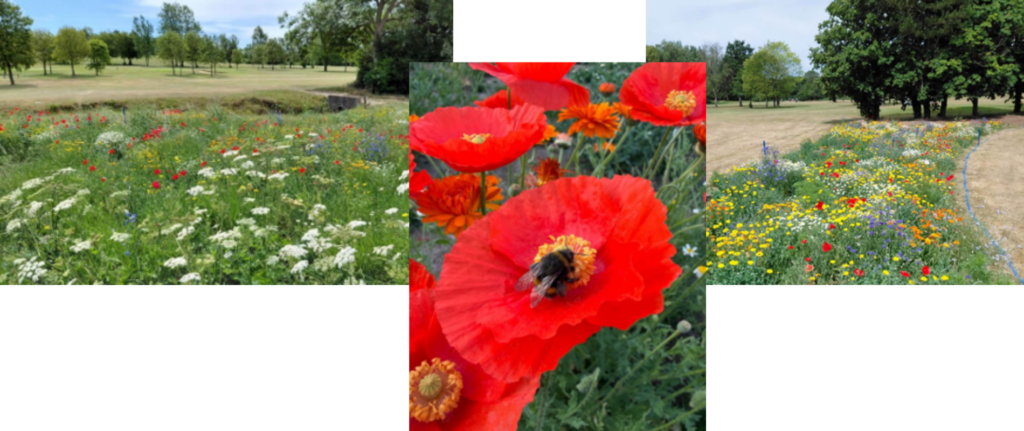
By early July, the transformation was unmistakable. Areas that had been ordinary managed grass became colourful, pollinator-filled displays, and the speed of that final change, after weeks of apparently nothing happening, took us by surprise too.
Feedback from Members
Feedback has been overwhelmingly positive. Members regularly comment on the colour the meadows add to the course, and how areas that would once have gone unnoticed are now a real feature of a round.
Some of the photographs here were taken and shared by members themselves, which is a good sign that this project resonated in a way many others don’t.
Lessons We Learned
That same enthusiasm is a good note to end this project on, because the lessons behind it are refreshingly simple:
- Be patient
- Avoid sowing on windy days
- Keep the planning process simple
- Choose locations carefully
- Measure before ordering seed
- Trust the seed mix and the process
The biggest lesson of all: biodiversity projects don’t need to be expensive or complicated. With some planning, patience and the right location, and by using the staff and equipment you already have, almost any sports venue can create valuable space for nature.
Support Feature 2: Community Partnerships in Action - Working with Men in Sheds MK
Environmental sustainability isn’t only about nature. It’s also about people, and one of our most rewarding initiatives shows how the two can reinforce each other at modest cost to the club.
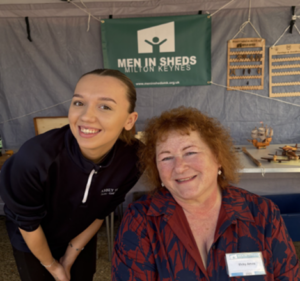
Our partnership with Men in Sheds MK, a charity tackling social isolation and supporting men’s wellbeing through practical activities and shared projects, has delivered biodiversity improvements across the course while giving their members a meaningful, hands-on project. It’s proof that sports venues can create environmental and social value through the same piece of work.
Step 1: Identify Potential Community Partners
The first step was finding local organisations whose goals aligned with ours, and after being recommended to connect with our local Men in Sheds group by Craig Boath, an experienced golf sustainability professional, it became clear the partnership would be a natural fit. Their focus on practical skills, community engagement and shared activity complemented our ambition to improve biodiversity across the course.
Many clubs will have similar groups nearby, whether that’s Men in Sheds (of which there are over 1000 groups across the country!), conservation organisations, volunteer groups or community charities, already looking for exactly this kind of project.
Step 2: Start a Conversation
Partnerships don’t need to start with a strategy document or a fully worked-up plan. A simple email, phone call or informal meeting is often enough to find common ground.
Our early conversations centred on one question: how could we work together to create something positive for the organisation and the local community?
Step 3: Identify Shared Objectives
Successful partnerships are built on shared goals. We wanted to enhance biodiversity across the site; Men in Sheds were looking for meaningful projects that would engage members and put their skills and experience to use. That shared purpose gave the partnership a strong foundation from day one.
Step 4: Start Small
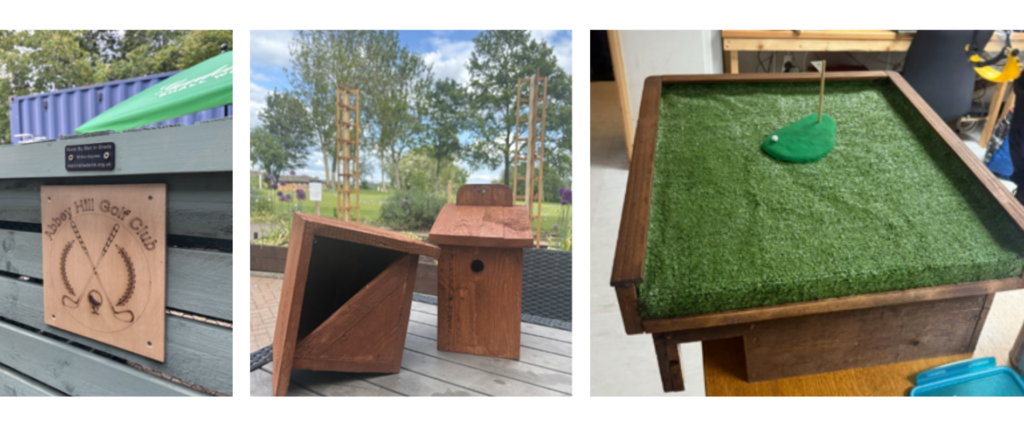
Rather than launching straight into something large-scale, we focused on practical, achievable improvements. We make a small donation to Men in Sheds for each feature they build, and they have constructed us a custom compost bin alongside a range of wildlife features for inclusion in our dedicated biodiversity area, including:
- Bird boxes
- Bug habitats
- Wildlife shelters
- Hedgehog houses
These features delivered an immediate benefit for wildlife and, just as importantly, gave Men in Sheds members a hands-on, worthwhile activity.
Step 5: Support the Partnership
Good partnerships extend beyond a single project. Alongside the biodiversity work, Abbey Hill has hosted fundraising events for Men in Sheds and offers discounted food, drink and facility access to members when they visit. Over time, this has grown into a genuine, ongoing partnership rather than a one-off initiative.
Step 6: Let the Partnership Evolve
Some of the best ideas emerge once people start working together. By staying open to new opportunities and letting the relationship develop naturally, partnerships can create benefits nobody identified at the outset.
Outcomes
Environmental Benefits
- Additional habitat for wildlife
- Increased biodiversity across the site
- Greater awareness of nature among members and visitors
Community Benefits
- Opportunities for social connection
- Meaningful and rewarding activities
- Increased awareness of the charity’s work
- Stronger links between the golf centre and the local community
Club Benefits
- Enhanced community engagement
- Positive member feedback
- Strengthened sustainability credentials
- A partnership that continues to deliver value at modest cost
With more than 1,000 Men in Sheds groups operating across the UK, this is a model that could be replicated by sports venues nationwide. Often, all it takes to get started is a conversation.
Conclusion: Key Takeaways for Other Sports Venues
- Look beyond job titles. Staff, students and volunteers often hold valuable skills that go untapped.
- Start with what you already have, whether that’s underutilised land, existing staff time or local community connections, rather than waiting for a bigger budget.
- Biodiversity projects don’t need to be expensive to make a real impact.
- Partnerships can deliver environmental and social benefits at the same time, often for little more than the cost of a conversation.
- Start small, learn as you go, and let momentum build over time.
At Abbey Hill, our most successful sustainability initiatives haven’t depended on budget. They’ve depended on recognising the people, partnerships and resources already around us. That’s my advice to any other sports venue:
Start with the people, partnerships and resources you already have. You might be surprised by what’s possible.