
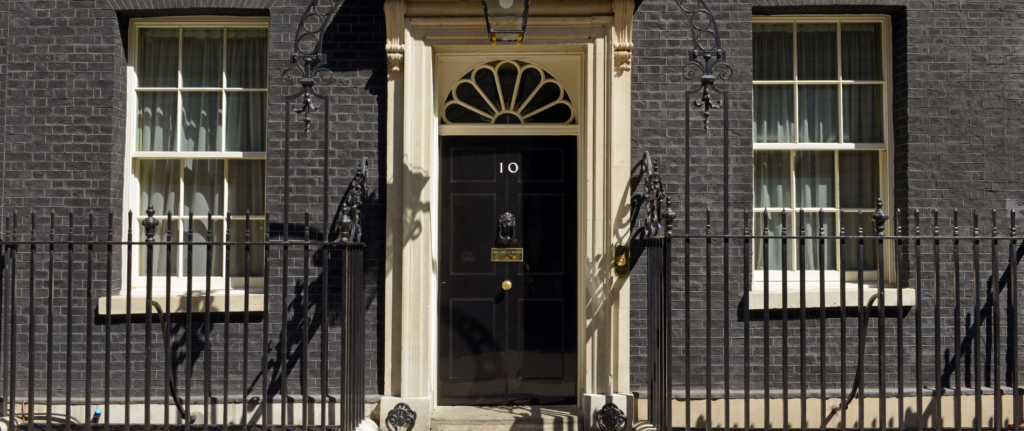
Andy Burnham appears highly likely to become the next Prime Minister. His path to Downing Street is not yet formally complete, but the withdrawal of several potential rivals means that he could take office as soon as mid-July.
Few, if any, modern prime ministers have arrived with such an instinctive understanding of sport’s place in national life – or such a substantial record of engaging with the sector.
Similarly, Burnham has an established record and set of public policy positions on climate change and net zero from his tenure as Mayor of Greater Manchester.
He was set to speak at the BASIS Conference earlier this month, until the pressures of the campaign trail and the rules around purdah made that impossible. His initial willingness to attend is an encouraging sign about his understanding of how connected sport, climate, nature and sustainability are.
But understanding and familiarity does not mean certainty. Burnham would enter office facing severe economic, geopolitical and political pressures. Whether sustainability and climate resilience become defining features of his administration will depend not simply on his personal sympathies, but on the makeup of his top team, and how successfully they are connected to his central priorities: household security, economic renewal, regional growth, public-service reform and national resilience.
A Prime Minister who understands sport
Burnham’s relationship with sport is personal, political and cultural.
He is a longstanding Everton season-ticket holder. He has repeatedly spoken about football as a network of institutions rooted in communities and belonging to supporters. He has supported independent regulation of English football and criticised decisions that he believed treated clubs and their communities unfairly.
He also served as Secretary of State for Culture, Media and Sport between 2008 and 2009. That experience gives him an understanding of the machinery of government around sport, and while the sector – and the financial and environmental pressures facing it – has changed considerably since then, a big play on sport (such as a northern bid for the Olympics or the Ryder Cup) is very possible.
Most significantly, he became instrumental in the campaign for justice following the Hillsborough disaster. Burnham has described the hostile reception he received at the 2009 anniversary service at Anfield as a turning point: an encounter that forced him to confront the gulf between the institutions of the state and the experiences of affected families. His subsequent support for the families made Hillsborough central to his political identity.
That history suggests that Burnham instinctively understands sport as something much more important than medals, broadcasting contracts or major events. Sport is part of the social infrastructure of the country. Clubs, facilities and community organisations are places where identity is formed, trust is built and public policy becomes tangible.
That is an important foundation for the sustainability agenda.
A credible green record, grounded in place
As Mayor of Greater Manchester, Burnham developed a solid record on climate and environmental policy.
Greater Manchester has maintained an ambition to become carbon neutral by 2038 – way ahead of the national net zero target. Regional environmental plans have addressed energy, buildings, transport, nature, waste, air quality and adaptation, with an emphasis on connecting environmental action to better jobs, healthier communities and reduced inequality.
The most visible expression of this approach has been transport. Through the Bee Network and the return of buses to public control, Greater Manchester has sought to build a more integrated and accessible public transport system. The transition towards zero-emission buses has been presented not as a standalone environmental project, but as part of a broader programme of economic and social reform. It is more than a footnote to remind you that Chris Boardman, now Chair of Sport England, played a big role in delivering the Bee Network as Greater Manchester’s Cycling & Walking Commissioner, then Transport Commissioner, during Burnham’s first two terms as Mayor.
Burnham has also advocated large-scale building retrofit, cleaner air, green skills and greater local control over energy and infrastructure investment. He argued consistently that net zero cannot be delivered through national targets: mayors and local authorities need the powers, funding and flexibility to turn ambition into practical change.
His language has generally been pragmatic rather than ideological. He has described the transition as an opportunity to create jobs, reduce bills, improve health and rebalance the economy. He has also stressed fairness, arguing that the costs of change cannot simply be transferred to households that are least able to bear them.
This is potentially significant for sport. The sector’s environmental transition will ultimately be delivered place by place: through facilities, transport systems, energy networks, public spaces, clubs and communities. Burnham’s mayoral record suggests a natural understanding of that local delivery challenge.
However, Greater Manchester’s experience also demonstrates the limits of local leadership. The city-region has acknowledged that it is at risk of missing its 2038 ambition without greater national support and faster systemic change – something Burnham examined extensively in Head North, the book he wrote alongside Liverpool Mayor Steve Rotheram. His government is therefore likely to embrace the responsibility for providing precisely the powers, investment and policy consistency that he consistently demanded from Westminster.
The climate and energy inheritance
The immediate in-tray would be difficult.
The next Prime Minister will inherit renewed volatility in international fossil-fuel markets, continuing pressure on household and business energy costs, constrained public finances and an urgent need to improve the United Kingdom’s energy security.
At the same time, the government has proposed the Seventh Carbon Budget, covering 2038–2042 and requiring emissions to fall by approximately 87 per cent from 1990 levels. Agreeing a target is only the beginning. The next administration will need to publish and implement a credible delivery plan encompassing electricity generation, grids, transport, buildings, industry, land use and skills – not easy at the best of times, very difficult when the agenda is so heavily contested politically.
There is also a widening gap between climate mitigation and climate adaptation. Recent heatwaves, flooding, water stress and other extreme weather have made clear that the country must prepare for climate impacts that can no longer be avoided. The condition of public infrastructure, local government finances and emergency planning all make this harder.
Sport sits within every part of this inheritance.
Clubs and facilities remain exposed to high and volatile energy costs. Many community buildings are old, inefficient and expensive to maintain. Grassroots pitches and playing surfaces face flooding, drought and extreme heat. Governing bodies and event organisers must protect participants, workers and spectators from increasingly dangerous conditions. Supply chains, insurance costs, water availability and transport disruption create further risks.
The political challenge for Burnham would be to avoid allowing net zero to become an isolated or defensive policy agenda. Positioning sustainability as part of a broader programme of security and renewal is essential: reducing exposure to volatile fossil-fuel prices, improving public infrastructure, creating skilled employment, protecting communities and making places healthier and more resilient.
There are good reasons to believe that this approach would align with his instincts. But it will compete with many other demands for political attention and public investment. The structure of his government, the Chancellor he appoints and the status given to climate and energy within his central economic programme will therefore matter as much as his previous statements.
A five-point plan for sport
A new government could quickly demonstrate that it understands both sport’s exposure to environmental change and its ability to help deliver national priorities.
1. A clear place for sport in national resilience planning
Government should make it clear that sport is a central stakeholder in any work to assess the impact of flooding, heat, drought, water shortages and other climate risks. Any practical national resilience framework should explicitly cover sport.
2. Launch a sustainable sports facilities programme
A coordinated investment programme should help community clubs, leisure centres and other facilities reduce energy and water use, install clean technologies and adapt to extreme weather – using established mechanisms such as Sport England’s Movement Fund as the useful models.
This could combine public funding with private finance, technical assistance and aggregated procurement, making improvement accessible to smaller organisations that lack specialist staff or capital.
3. Put sport at the heart of place-based delivery
Mayors and local authorities should be empowered to integrate sport into regional transport, energy, health, adaptation and skills plans.
Sports organisations can provide trusted community locations, major local assets and routes to large and diverse audiences. They should be treated as delivery partners in local resilience and decarbonisation, not as recipients of environmental requirements.
4. Create clear standards, data and accountability
The sector needs proportionate and consistent expectations for measuring emissions, assessing climate risk and reporting progress.
Government should support common methodologies and open tools, such as the resources BASIS provide, while ensuring that requirements reflect the very different capacities of a Premier League club, a national governing body and a volunteer-led community organisation.
5. Mobilise sport as a national communications partner
Sport can make the transition relevant to millions of people who may never engage with a conventional climate campaign.
Government could work with athletes, clubs, governing bodies and community organisations to communicate practical benefits: warmer and cheaper buildings, cleaner air, better public transport, protected playing fields and more resilient communities.
This must not become a campaign in which sport lectures the public. Its strength lies in showing what change looks like in familiar places and through trusted voices.
There is an important point in this though: government won’t be able to achieve this without first providing meaningful, consistent and sustained support to the sector. It is essentially a bargain, where the government provides proper support for the first time ever, which helps sport lead on sustainability and resilience-building, which in turn gives both sport and government the opportunity to explain the benefits credibly. Without the real-world gains, it doesn’t work.
The opportunity
An Andy Burnham premiership would not automatically place sport or sustainability at the centre of government. The pressures of office will pull in other directions, and the difficult questions of finance, delivery and public consent will remain.
But there is a potentially powerful alignment.
Burnham understands that sport is part of the fabric of communities. His mayoral record recognises that environmental action succeeds when it is connected to jobs, transport, health, fairness and local control. And the national climate challenge increasingly demands exactly that kind of integration.
For BASIS and its members, a broad hope that the new Prime Minister would “support green sport” is naive. But the conviction that a more sustainable and resilient sports system can help government achieve some of its most important objectives could be transformational: lowering costs, strengthening communities, improving public health, renewing infrastructure and protecting the places and institutions people value most.